Case Study: Zero Energy

Four Winds Alternative and CTE High School

Fort Totten Public School DistrictFort Totten, North Dakota

The First Zero Energy Building on Tribal Land

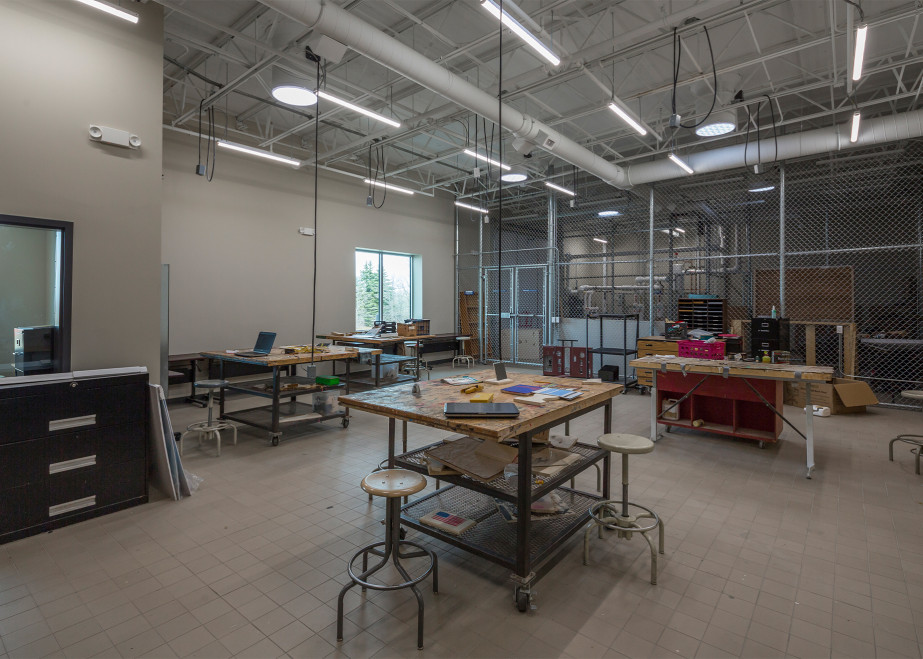
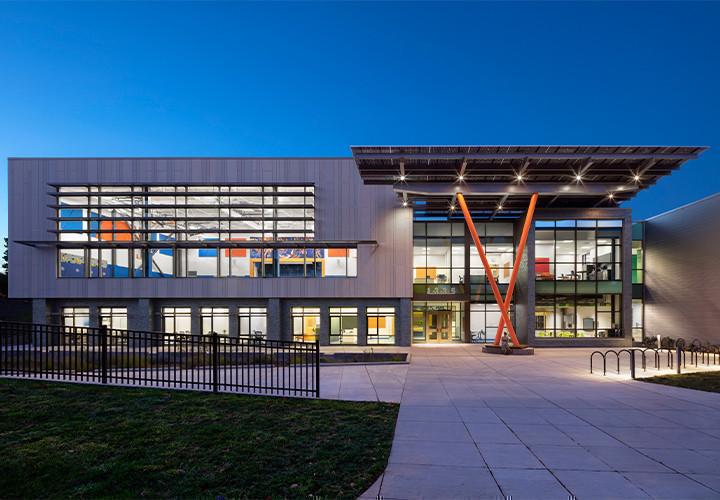
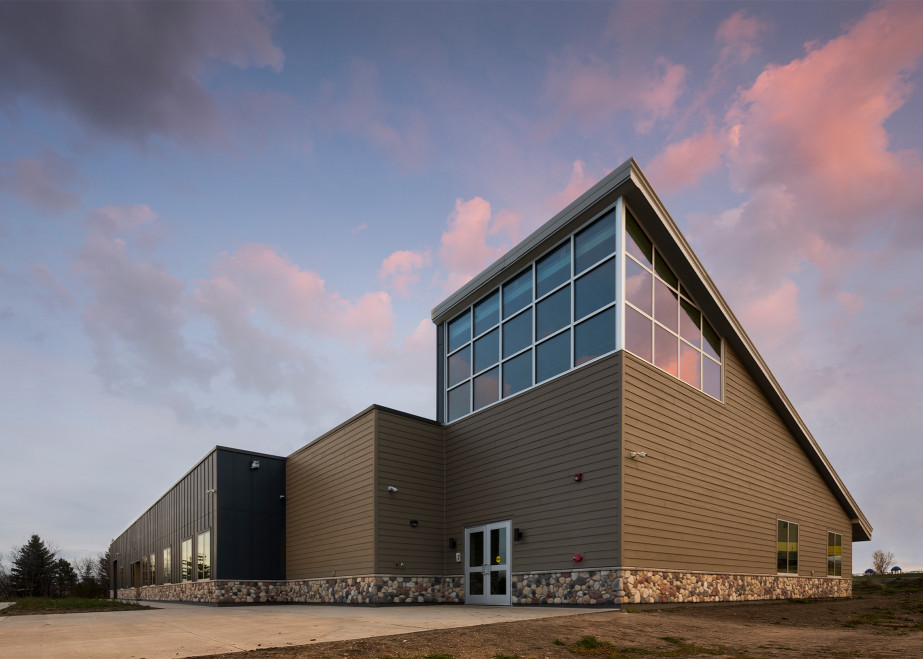
The Four Winds Alternative and Career Technology Education (CTE) High School, located on the Spirit Lake Reservation in North Dakota, is a modern facility designed to support diverse educational needs with tech classrooms, conference spaces, offices, and workshops. Completed in 2017, it stands as the first zero energy education facility built on tribal land. For the Spirit Lake Nation, sustainability and energy independence are deeply rooted values, driving the adoption of renewable energy systems and environmentally conscious building practices. However, situated in climate zone 7, the project faced notable challenges in achieving its zero energy goals. Through close collaboration, the facility was officially certified as a zero energy building by the International Living Future Institute in February 2026, marking a significant milestone as the first certified Zero Energy Tribal building in the nation.

The Challenges

  • Design a zero energy building in a challenging climate zone 7 environment
  • Transition to clean energy, providing long-term environmental sustainability and energy independence for the community
  • Utilize the building as a teaching tool, bringing operational data into the classroom
“ Created with Sketch.

This building is about the future. We’re not only preparing our students for the future, but we’re also designing this building for the future by using the earth respectfully and efficiently to power the school. ” Created with Sketch.

Jeff Olson

Superintendent, Fort Totten Public Schools

The Solutions

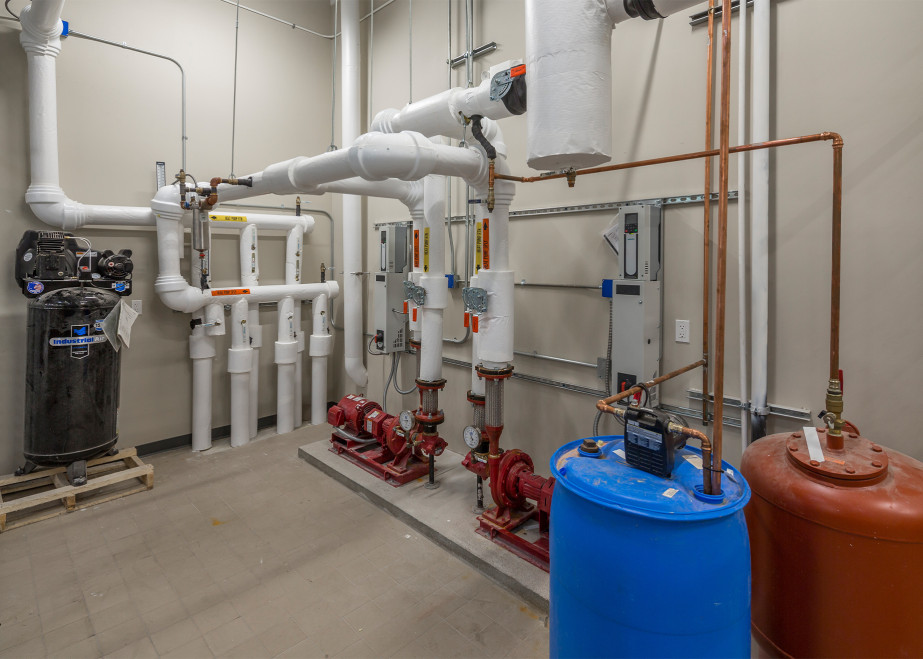
With a commitment to sustainability and energy independence, the Spirit Lake Nation established ambitious energy goals from the project outset. To meet these goals and address the challenges of designing in a climate zone 7 environment, CMTA designed an extremely efficient HVAC, controls, and lighting system, as well as a superior insulated building envelope, to maximize energy efficiency and minimize operating costs. The building’s HVAC system includes a 36-well geothermal system, central energy recovery unit, high-efficiency water-to-air heat pumps, and a building automation system (BAS) with specialized control sequences. Each classroom and workspace is served by an individual heat pump, allowing the central energy recovery unit to efficiently supply ventilation air directly to each space.

A particularly innovative feature is the building’s occupancy-based ventilation strategy. Rather than relying on CO2 sensors, occupancy sensors control motorized dampers on the outside-air inlets of individual heat pumps. When a space is unoccupied, the damper closes, increasing duct static pressure and signaling the energy recovery unit to reduce airflow. This minimizes unnecessary outside-air intake and fan energy while avoiding the inefficiency of ventilating unoccupied spaces. Combined with a carefully managed building-wide occupied/unoccupied schedule, this strategy significantly reduces overall energy consumption while maintaining an optimal indoor environment for students and staff. MERV-13 filters were also installed on the energy recovery ventilation unit, an innovative and proactive choice for an educational facility designed prior to the COVID-19 pandemic.

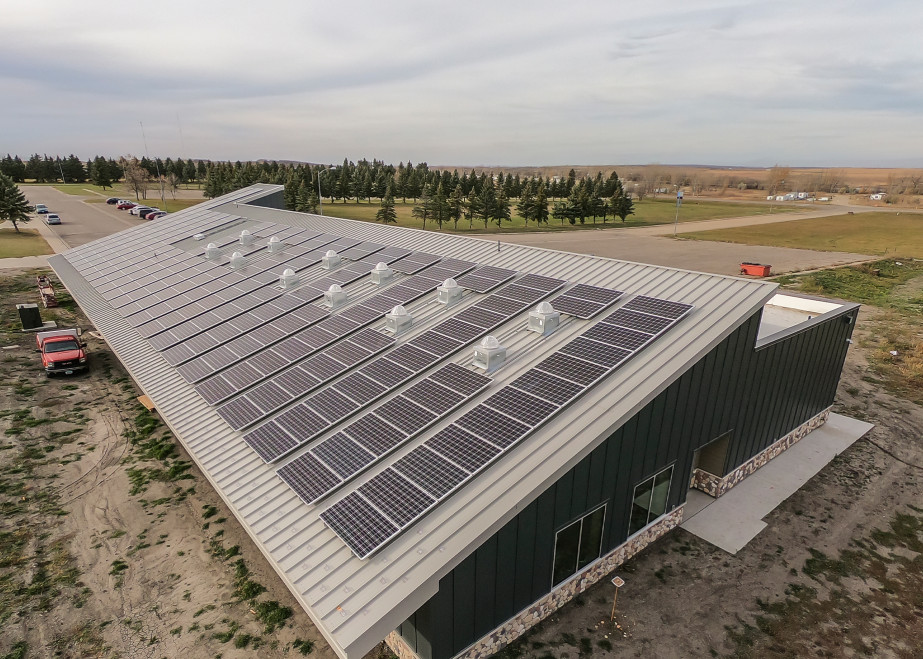
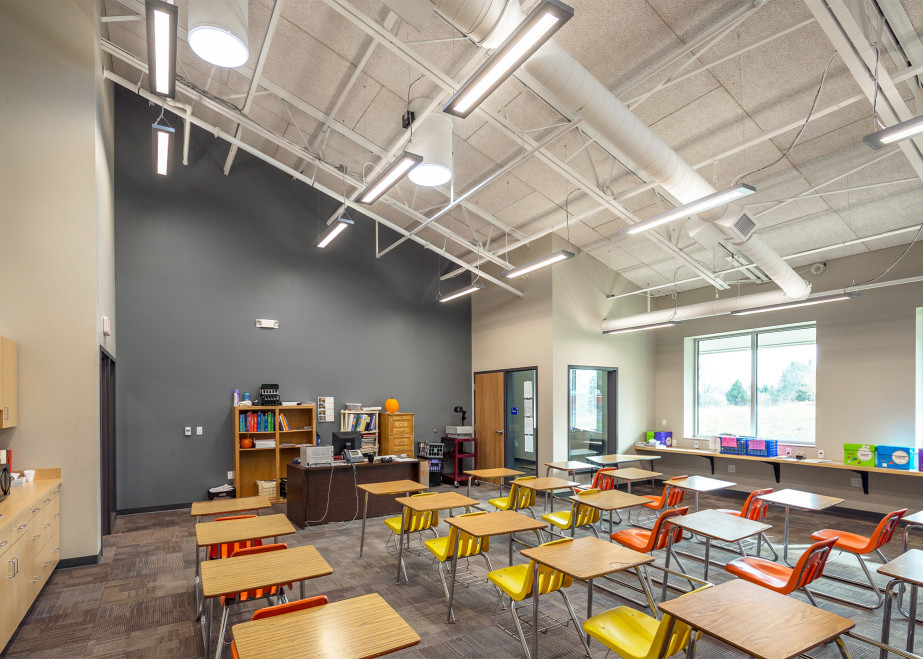
Efficiency extends throughout the rest of the building. Insulated Concrete Forms (ICFs), Structurally Insulated Panels (SIPs), and triple-pane windows create a high-performance envelope, while LED lighting with advanced controls, occupancy sensors, and solar tubes reduce lighting energy and take advantage of natural daylight. An 80 kW roof-mounted photovoltaic system was carefully sized to fully offset the facility’s energy consumption. Together, these integrated strategies enabled the building to achieve one of the lowest school EUIs in the nation, operate beyond net-zero energy, and export surplus energy back to the grid. 
Beyond Net Zero Energy

The project demonstrates how an integrated approach to energy efficiency can deliver both strong performance and financial value. With total construction costs of approximately $3.8 million, the geothermal heating and cooling system achieved an estimated payback of less than eight years, an impressive timeline for a deep-well geothermal system. The building’s ultra-tight envelope reduced heating and cooling demands enough to support a smaller, more cost-effective wellfield, while advanced geothermal controls further reduced energy consumption.

That strategy continues to pay dividends. In 2023, the facility recorded a net energy use of -26,150 kWh, generating enough surplus energy for the district to sell power back to the utility grid! 

The Results

Conservatively modeled to perform at a 24 EUI (kBtu/ft²/yr), the building is operating well below projections at only 15.87 EUI—nearly 70% more efficient than a baseline comparable building type. The facility’s net zero energy design annually eliminates 51 metric tons of CO2 emissions—equivalent to removing approximately 12 gasoline-powered vehicles from the road each year. Since its opening in 2017, the facility has offset over 66,631 gallons of gasoline, as reported by its building dashboard.

By integrating sustainable technologies such as a ground source geothermal energy system and a roof-mounted solar array, CMTA helped the district achieve their goal of transitioning to clean energy, providing long-term environmental sustainability and energy independence for the community.

Four Winds High School Consumption vs. Production

[{"x":"JAN","Consumption":"2.8","Production":"0.0"},{"x":"FEB","Consumption":"5.3","Production":"0.1"},{"x":"MAR","Consumption":"6.9","Production":"0.8"},{"x":"APR","Consumption":"8.7","Production":"1.1"},{"x":"MAY","Consumption":"9.6","Production":"5.9"},{"x":"JUN","Consumption":"10.3","Production":"9.3"},{"x":"JUL","Consumption":"10.7","Production":"12.6"},{"x":"AUG","Consumption":"11.2","Production":"15.9"},{"x":"SEP","Consumption":"11.9","Production":"18.9"},{"x":"OCT","Consumption":"13.0","Production":"21.8"},{"x":"NOV","Consumption":"14.4","Production":"21.8"},{"x":"DEC","Consumption":"15.9","Production":"22.1"}]
What does this data mean?
Consumption: Energy used by the building
Production: Energy generated by the building