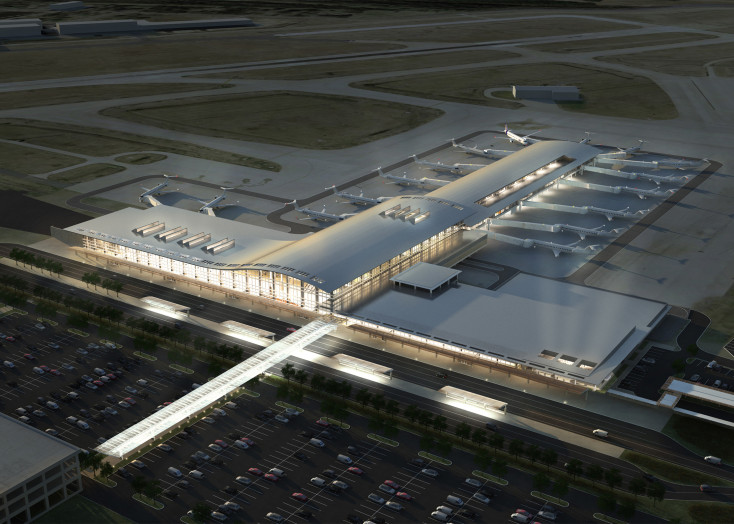
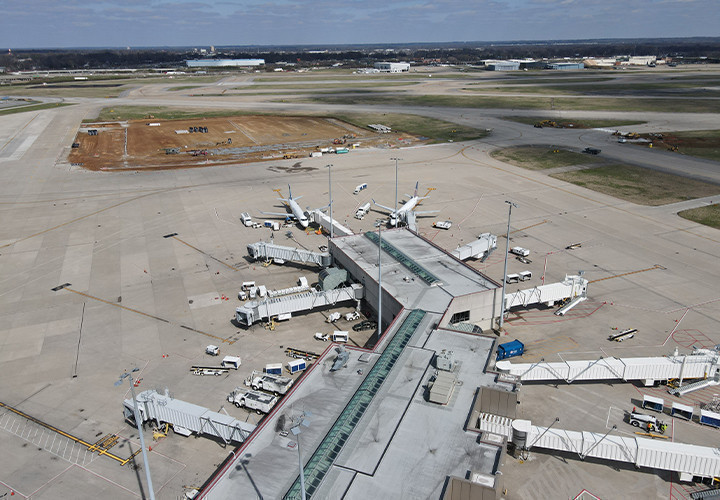
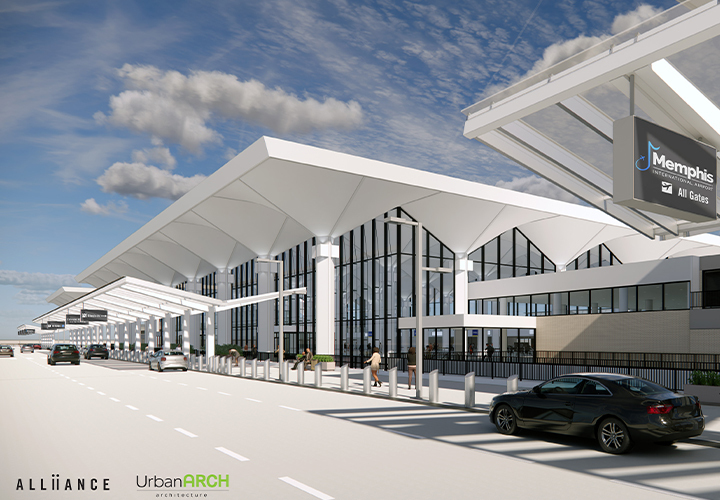
To meet growing air service demand, Clinton National Airport launched an ambitious, long-term program to comprehensively expand and renovate its 430,000 SF complex. This redevelopment initiative aims to modernize infrastructure while enhancing building performance and operational resiliency, ensuring the airport meets the evolving needs of future travelers. Partnering with Alliiance Architects, CMTA provided mechanical engineering for this multi-phase modernization project.
At the heart of this redevelopment effort is the construction of a geothermal central utility plant, which will support both current operations and future expansion. Designed to enhance efficiency and sustainability, the system features 750 wells drilled 500 feet deep and a 1,000-ton capacity heat recovery chiller. By transitioning from traditional combustion equipment to advanced electric systems, the plant not only reduces peak energy demand but also enables integration with future renewable energy solutions, like solar power. To ensure flexibility, CMTA strategically sized the plant to support the airport’s planned expansion, which includes the construction of a new arrivals hall, baggage claim, and concourse in subsequent phases. Additionally, critical infrastructure changes, such as relocating underground utilities, reconfiguring parking lots, and incorporating structural provisions for future growth, were executed to accommodate the new central plant and align with the airport's long-term vision.
The central plant project was made possible, in part, by a $17.5 million grant from the FAA’s VALE grant program—the second largest VALE award in history. LIT also received an $8.5 million CPRG grant from the state. This funding fully funded the airport's commitment to innovative, sustainable infrastructure that reduces environmental impact while optimizing operational efficiency. The central plant is also projected to achieve approximately $200,000 in annual utility cost savings, furthering its economic impact. By prioritizing electrification and sustainability, Clinton National Airport sets a powerful example for the future of airport development.